 Maid
MaidNervous about your first maid cafe? Alone, shy or no Japanese
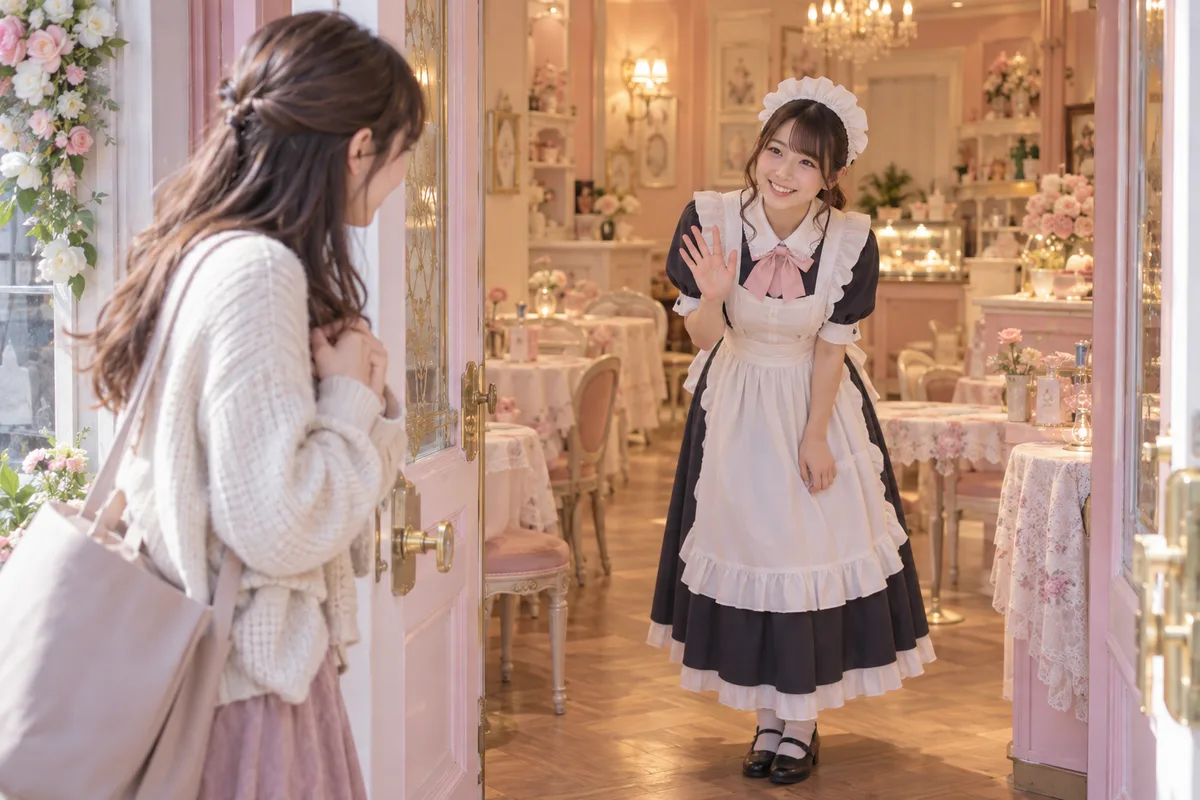
Maybe you've walked past a maid cafe in Akihabara three times already. You want to see what it's like, but something stops you at the stairs: you're on your own, you don't speak Japanese, you have no idea what the rules are, and the thought of chanting "moe moe kyun" in front of strangers makes you want to disappear.
That feeling is extremely common, and it's a good sign: it means you care about doing it right. This guide goes through the usual worries one by one, honestly, so you can decide if you're ready and plan a first visit that feels easy. If you'd like the full step-by-step of a visit first, read how to visit a maid cafe.
"Is it weird to go alone?"
No. Solo guests are a normal sight at maid cafes, and many regulars always come by themselves. Plenty of cafes have counter seats or small tables that suit one person well. Nobody will look at you and wonder why you came alone.
Going solo even has advantages. You set the pace, you can leave whenever you like, and the maids often chat a little more with a guest sitting by themselves. If you don't feel like talking, that's fine too: you can simply eat, watch the room and enjoy the atmosphere.
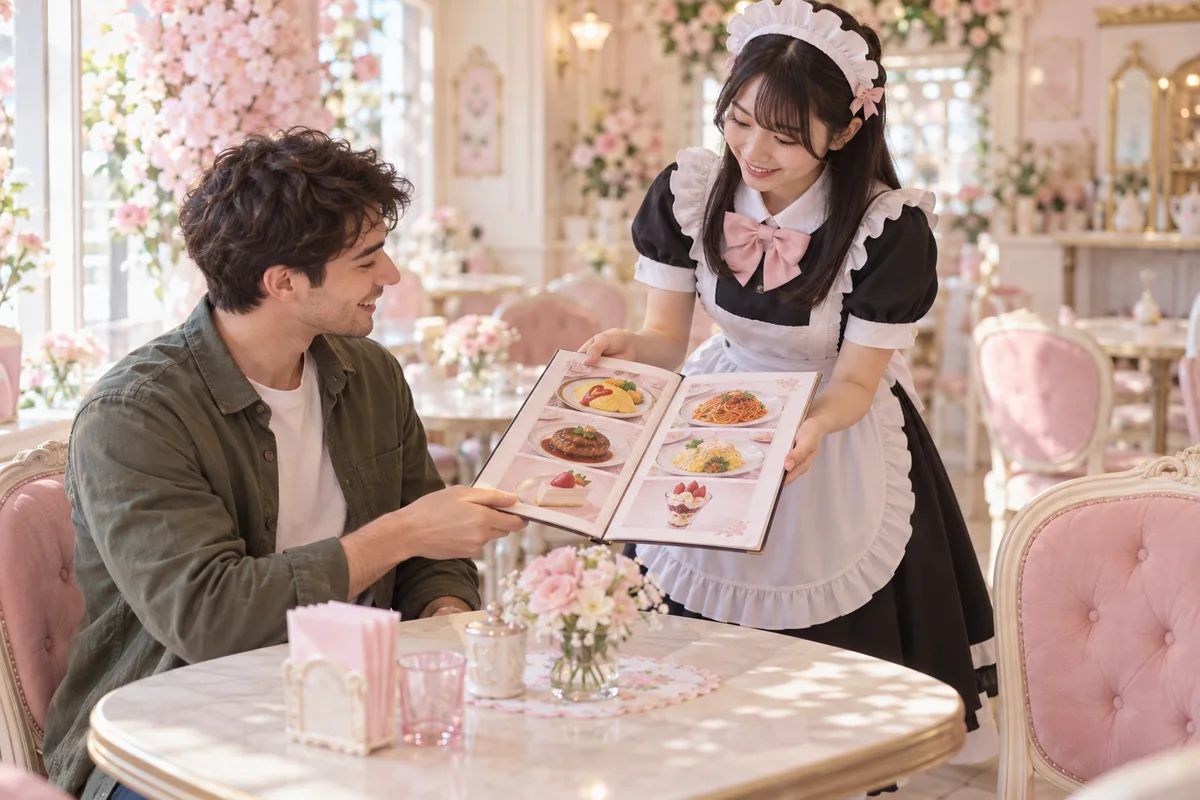
"I'm shy. Do I have to perform?"
This is the big one. Here's what actually happens:
- Being called "master" or "young lady". When you walk in, you'll hear "Okaerinasaimase, goshujin-sama!" ("Welcome home, master!"). Women are usually greeted as "ojou-sama". It's a set phrase that every guest hears. You don't have to answer in character; a smile or a small nod is plenty.
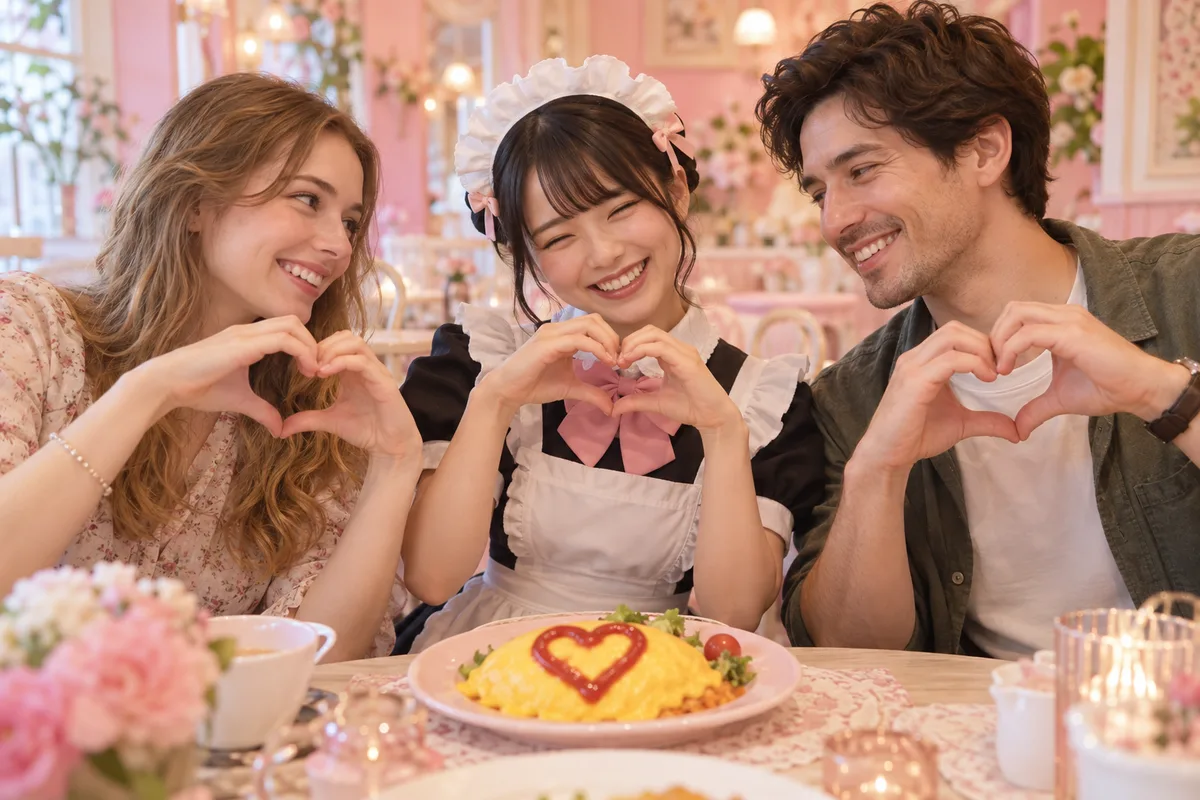
- The "moe moe kyun" chant. When your food arrives, the maid may invite you to make it tastier with a short chant while you both make a heart with your hands. She leads it; you just follow, as loudly or as quietly as you like. A small heart and a mumbled "moe moe kyun" is completely normal.
- Everyone feels a bit silly. The staff do this all day, and first-timers blushing through it is part of the charm. Nobody is grading you.
If you're very shy, pick a quieter cafe rather than one known for stage shows, and sit where you feel comfortable. Some cafes feel more like a calm tearoom than a party.
"I don't speak Japanese"
You don't need to. Staff at many cafes speak only a little English, but the visit follows a simple pattern: you're seated, you order, you eat, you pay. Menus usually have photos, so pointing works. Cafes used to foreign guests sometimes have an English explanation of the house rules. A translation app covers the rest.
A few phrases are enough to feel confident:
- "Hajimete desu" — It's my first time. Say this when you arrive; first-timers usually get the rules and prices explained.
- "Kore onegaishimasu" — This one, please (while pointing at the menu).
- "Daijoubu desu" — I'm fine, no thanks. The polite way to decline anything.
- "Okaikei onegaishimasu" — The bill, please.
"What if I spend more than I planned?"
This worry is reasonable, and it's easy to manage. At a classic daytime maid cafe, the costs are usually straightforward: a cover charge or entry fee, plus at least one order per person. Cheki photos, games and other extras are optional. Roughly ¥2,000–¥3,000 covers a relaxed hour with a drink and a dish; our maid cafe prices guide has real numbers.
To stay in control:
- Decide your budget before you go in, and bring some cash as a backup.
- Read the price list at the door or on the menu. If anything is unclear, ask before you sit down: "Ryoukin wa ikura desu ka?" (How much is it?).
- Know when your time ends. Hourly covers usually restart each hour, and some cafes run fixed seatings.
- If you're offered something you don't want, "Daijoubu desu" with a smile is enough.
The places where bills grow faster are evening concept bars: timed drink sets, drinks for the cast, service charges and, at some shops, automatic extensions. They can be fun, but they're not the easiest first step. And never follow someone from the street into a bar you can't look up; our guide to touts and scams explains why.
"Are women, couples and groups welcome?"
Yes. Maid cafes are visited every day by tourists, couples, groups of friends and families, not only by men on their own. Women are greeted as "ojou-sama" and get exactly the same service. Going with a friend is a great way to share the embarrassment of the chant, and laughing together about it is half the fun.
For larger groups, check the cafe's official website first: some chains take reservations, which saves you waiting on the stairs. And if you'd rather be the one who's pampered by a butler, Ikebukuro is where Tokyo's butler cafes are, though some are reservation-only.
"I don't know the rules"
There are only a few, and they're mostly common sense: don't photograph the maids with your phone (buy a cheki instead), don't touch them, and don't ask for their contact details. Our etiquette guide covers the rest in a few minutes. If you're ever unsure, ask. Staff are used to explaining things.
A low-stress plan for your first visit
- Go on a weekday afternoon. It's quieter than weekend afternoons, so there's less queueing and less audience.
- Choose a classic daytime maid cafe rather than a night bar.
- Plan for 60 to 90 minutes. That's enough to eat, see the chant and decide whether you want a cheki.
- Pick a place with a price system you understand before you arrive.
A few examples with a clear system, based on what they publish:
- Cafe Mai:lish, Akihabara — no table charge, with 90-minute seatings, so you know exactly how long your visit lasts. Hours vary by day; check its page.
- @Home Cafe Nagoya Osu — a one-time entry fee of ¥780 for adults, with food and drinks on top. Opens at 11:00 on weekdays, 10:00 on weekends.
- Cafe Andante, Osaka (Nipponbashi) — a ¥330 hourly cover, in a mansion-style room with a calmer pace than the district's flashier spots.
- HoneyHoney Yokohama — a daytime maid cafe near Yokohama Station, known for hand-drawn omurice. Lunch from ¥900, open from 12:00.
Prices and hours change, so check the cafe's page and its price board on the day.
You've got this
The first two minutes are the hardest. Once you're seated with a menu in your hand, most people relax and wonder why they worried. Start with maid cafes in Akihabara or the wider Akihabara guide; in Osaka, see maid cafes in Nipponbashi or all of Osaka; in Nagoya, maid cafes in Nagoya. Before you go, you may also like how maid cafes work and maid cafes in Tokyo for foreigners.